Sunday, April 23, 2006

Early Spring Birds, Marlborough, CT


A few days ago, as I was coming home from work, I saw a Raven feeding on a roadkill squirrel in front of our neighbor's house. I think the pair of ravens are back to the ridge behind our house. 20 years ago you only saw Ravens in Connecticut in the extreme northeastern and northwestern corners of the state. In recent decades they seem to have expanded their range.

I've seen a few other early spring birds back in our area. The phoebes have been back since the beginning of March and the Louisiana waterthrush has been singing down by our creek for two weeks. This next week should bring a big push of neotropical migrants.

A good way to explore the birds in your area is ebird, a project that allows birders to enter their observations and generate reports. These reports are combined to give a big picture of what the birds are doing. For example I can generate a map of Connecticut and see where all the reports of Raven have been since 2002. I can also generate a map of a particular month or week and watch were the arriving migrants are being seen.

Thursday, January 19, 2006

34 Biodiversity Hotspots


Conservation International has an interesting website devoted to the world's 34 biodiversity hotspots. A hotspot is a place with a large number of endemic species (found nowhere else). CI has identified 34 of these areas whose remaining habitat represent less than 3% of the world's land area, yet are home to 50% of the world's plant species and over 40% of terrestrial vertebrates. All of these hotspots are under heavy pressure having lost at least 70% of their original area to development or mismanagement.

LINK

Thursday, January 12, 2006

We are from France - Coneheads in America


I would have guessed the record for the loudest insect in the United States would go to one of the cicadas, however the record goes to the Robust Conehead Katydid which has a incredibly loud buzzing song that can be heard at 500 meters. I'm pretty sure I tried to sleep in a field at Fort Dix, New Jersey with a few of these and other types of Katydids making an incredible racket around me.

An interesting website I found is called the Singing Insects of North America. Its a collection of files, including audio on the major groups of singing insects, the grasshoppers, Katydids and Crickets and the Cicadas.

I also learned about some critters I never knew about, large western ground crickets called Grigs. They remind me a bit of the gigantic New Zealand crickets called Wetas. A female Wetapunga has the record for the world's heaviest insect. She weighed 71 grams and was 85mm long without the ovipositor. That's about the weight of 3 mice.

A new book is out on the Field Guide to the Grasshoppers, Katydids and Crickets of the United States. It should spark more interest in these noisy little beasts.

For the definitive Orthoptera site see the Orthoptera Species File Online.

Monday, January 09, 2006

Moths of La Selva, Cost Rica


There are an estimated 200-300,000 species of moths on earth. Some are among the most spectacular creatures you could ever imagine with electric colors that don't seem like they could be natural. The times I have spent in the collections of Harvard University and the American Museum of Natural History have been times of wonderful discovery. Each new specimen drawer yielding something new and exciting to me. I worked in the lab of Dr. David Wagner at the University of CT and assisted in several biological inventories of rare habitats with him. There is nothing like a humid night in the summer running the Mercury Vapor Lamps with hundreds of insects clinging to the white sheet. In the tropics the sheet might have so many insects that you can't see the sheet anymore.

Dave Wagner has done some fieldwork in Costa Rica at La Selva Biological Research Station studying the Lepidoptera. He has an online checklist of some of the species that he's come across during his trips there. The database section has a pulldown menu to select families of moths. Start with the Arctiidae (Tiger Moths) and the Saturniidae (Giant Silk Moths) and then explore some of the other families. I hope you are struck with the incredible diversity. Dave thinks the final list may include up to 7000 species from La Selva alone.

Saturday, January 07, 2006

Hunting Long-Horned Beetles in Iran


I love to read about natural history expeditions no matter what type of animal or plant they are looking for, whether tigers in India, new birds in Peru, or insects in New England. Invariably many interesting things are seen and new things are learned about the areas biota. Often it satisfies some of our curiosity about an exotic location. This website describes a recent expedition to collect Cerambicids (Long-horned Beetles) from Iran by a group from the Czech Republic. Along with fantastic pictures of the country and wildlife, the text is great reading for those with an interest in Natural History.

I think what I like best is when the participants passion for their subject shines through. Think about some of the TV naturalists like Sir David Attenborough or Jeff Corwin. It makes it so much better and their exitement is infectious.

Link

Friday, January 06, 2006

African Birding - Democratic Republic of the Congo


This country has had a sad recent history starting with problems of the Belgian colony followed by the kleptocracy of Mobutu Sese-Seko when it was called Zaire and the most recent wars starting in1998. The International Rescue Committee has named the conflict the worst humanitarian disaster since World War II and claim that over 4 million people have died.

Despite its overwhelming human problems it is a country rich in natural wonders and cultural heritage from the volcanic Virunga Mountains to the Pygmy Hunters of the Ituri Forest to the great Congo Forests. Hopefully the people of the DRC will emerge from their struggles to once again enjoy life in their rich and beautiful nation.

In the mid 1990's Tommy Pedersen, a Norwegian pilot and birder flew airliners around Zaire. He now flies for Emirates Air. His website documents some of the 1140 species of birds found in the DRC including the endemic Congo Peacock (Afropavo) and the Congo Bay Owl.

The most famous mammals of the DRC have to be the Gorilla, both Lowland and Mountain subspecies. Also the fascinating Okapi, the Giraffe's only living relative and one of the last large mammals discovered in Africa.

Thursday, January 05, 2006

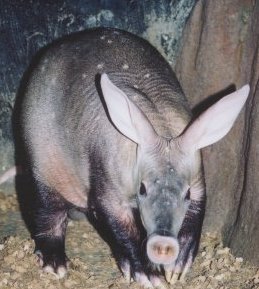
An Animal You Should Know: The Aardvark


One of the purposes of this blog is to introduce readers animals that they otherwise might know nothing about. The Aardvark, AKA Earthpig or Antbear is one cool beast that you should get to know. The only Aardvark I've seen was in the Philadelphia zoo. Recent molecular studies have placed them as a sort of proto-ungulate closer to pigs and cattle than to the anteaters and pangolins which were previously thought to be its closest relatives.

Looking like a cross between a rabbit and a pig these ant and termite eating critters live throughout Africa. They use their powerful claws to break into termite mounds and can dig faster than several men with shovels in soft dirt.

The link below gives some additional info from The Ultimate Ungulate Page - an internet guide to the world's hoofed mammals. It's a very interesting site worth exploring. You will definitely find some large mammals that you never knew existed like the Vietnamese Saola, only discovered in 1992.

Link

Tuesday, January 03, 2006

The world of naked animals

This was new to me. I've heard of hairless rats and mice and even some breeds of dogs and cats and my favorite the naked chicken but hairless guineapigs and hamsters!

I found a site devoted to two strains of hairless or nearly hairless guinea pigs called the Nearly Hairless Cavies Club. Through some links I also found out about the "Alien Hamster" - a nearly hairless beast that deserves the "cutest of naked small mammals" award. Ugliest goes to the naked mole rat.

Alliance for Zero Extinction

This organization seeks to limit global extinctions, both plant and animal, by bringing together international biodiversity groups to identify the most vulnerable areas. There is a lot of interesting information on their website.

The interactive map is an interesting place to explore with clickable sites. I clicked on a site in Bermuda and found that there are no endemic mammals or amphibians. The one reptile, the Bermuda skink is the only native land vertebrate other than birds. The two endemic birds are the Cahow or Bermuda petrel and a race of the white-eyed vireo. The forests of Bermuda are filled with endemic trees including the Bermuda Cedar (Juniperus bermudiana).

Monday, January 02, 2006

Snow Bugs

Most people think that all the insects and other invertebrates are hibernating during the New England winter, actually there are a few species that can be regularly seen in the winter.

Yesterday I took a short walk down to the creek that runs along our property with my kids. We had about 4 inches of new snow.

Under a board I found a very sluggish woodlouse. I reminded my son how he had eaten a handful of them when he was 3. I had been keeping two species found around our house in a styrofoam cup with some potato peels to eat. One species was gray a flattened, the others we called pillbugs could roll themselves up into a little ball. The seemed happy and had many baby woodlice. My son got the cup and sat under the dining room table popping the pillbugs in his mouth. I'm not sure how many he ate, but he put a dent in the population.

On our walk yesterday we also found quite a few snow fleas, a small black springtail that can be found on the surface of the snow on mild days. We also found a spider walking around. The best find for me was a female snow scorpionfly, a flightless insect that feeds on mosses and is active as an adult during the winter. This was only the second time I've ever seen one.

In the spring around March we tend to get good numbers of winter stoneflies crawling around on the snow. Here's a group that monitors winter stonefly hatches as an indicator of water quality.

Saturday, December 31, 2005

Crazy Salamander Ballistic Tongue Videos

I could watch these all day. You read it right - a ballistic tongue. Some salamanders actually fire their own tongues at prey...and weird looking tongues they are. I found this site years ago and it still fascinates me.

Stephan Deban is a Biology professor at the University of South Florida. His website has a fantastic collection of slow-motion video of salamanders feeding. Ok, that may sound boring...salamander opens mouth and shoves in worm. I assure you, you will be amazed-especially by Hydromantes supramontis - a cave dweller from Sardinia. It launches its tongue 80% of its body length.
LINK

Friday, December 30, 2005

Bat Poop-eating Salamander


For some reason this story appeals to me on several levels not the least being my British heritage and their love of scatalogical humor. I would like to subtitle this entry as Eating Bat Poop better than a Big Mac.

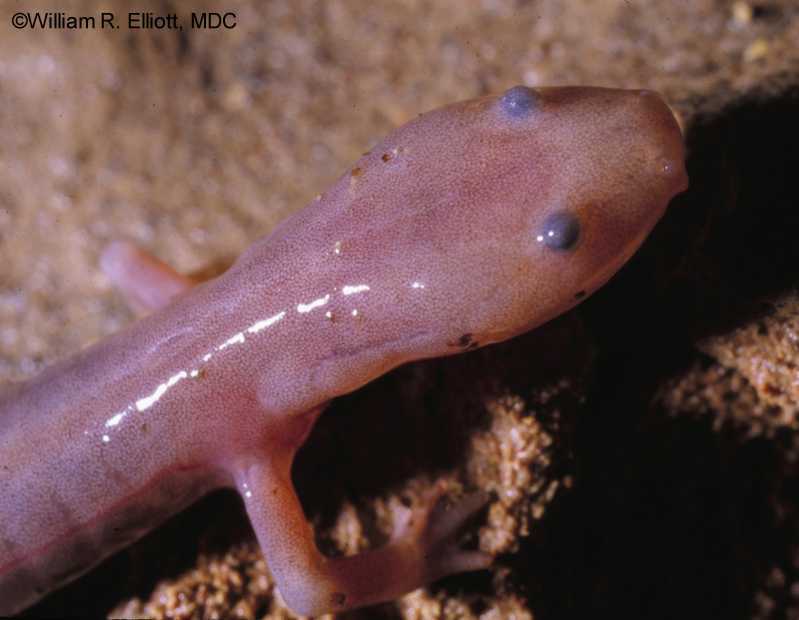
The grotto salamander is a cave dweller, as are a number of salamander species around the world. It is an interesting beast that is blind as an adult. As a larval salamander it has functional eyes and often develops outside of caves. The adults live exclusively in caves. Other blind salamanders retain their gills as adults and never leave the water. It was previously thought that Grotto salamanders ate insects and cave shrimp that fed on bat guano. A recent study of a population of salamanders in Oklahoma revealed an unusual feeding habit. It turns out that since so much of the bat guano is undigested insects the bat crap is more nutritious that the shrimp! I love this stuff. The best part of the study was comparing the protein and fat contents of the bat guano, the shrimp, and a MacDonald's big mac. The bat guano came out on top with 54% protein and 1% fat while the Big Mac was 23% protein and 33% fat. The Shrimp was in the middle with 44% protein and 8% fat.

Link

Panda Bonanza


A few weeks ago I was in Washington DC for the American Association of Tropical Medicine and Hygience Meeting. I gave two talks on the blood parasite Babesia microti, a pathogen that our research group at the American Red Cross studies.

While in Washington, my family and I visited the National Zoo and of course we had to see the pandas, especially the new baby panda. I'm glad to report that the baby is doing well and recently took a romp outside with its mother.

Pandas have an advantage when it comes to conservation...they're cute. I mean really cute. My children like a website devoted to all things cute called cuteoverload.com. When visiting the site I saw a picture from the Wolong Panda Reserve in China. This year they had 18 babies born, a record. Here is a picture of 16 of them being held by their keepers from the China Daily Website.

Condor Progress

The San Diego Zoo reports that California Condors reintroduced to the Baja Peninsula of Mexico have begun to expand their range northward and may be seen flying in San Diego County for the first time since 1910. There are 4 groups of birds in the US and Mexico, all reintroductions descended from 14 birds. Eventually it is hoped that the southern California population and the Mexico population will meet up.

In 1985, while I was in High School, I took a weekend trip to California to try and see one of the last wild birds (I think they were down to 6). I flew a redeye People's Express from Hartford to Los Angeles for $99 round trip. I think my only food that weekend was a large package of hot cross buns I bought for a dollar. I did have to drop over 100 bucks to stay at Marina del Rey so I could take one of the fishing boats out. At a lookout in Los Padres National Forest I saw one of these magnificent birds, so large they look like a small plane. Within a few years all the birds were captured for the captive breeding program. Today there are about 270 birds, over 100 free flying.

LINK
photo from San Diego Zoo Website

Wednesday, December 28, 2005

Birding in the Buff


A story from the Japan Times by a naturalist with a penchant for wildlife watching while soaking in hot springs. A new one for listers - the bath list.

"An hour later, feeling part boiled and part frozen, I exited the pool having recorded an astonishing 21 species, ranging from those Whooper swans, goldeneye and goosander, to white-backed, great spotted and Japanese pygmy woodpeckers." - Mark Brazil

LINK

Monday, December 26, 2005

Thylacine (Tasmanian Tiger) website


A site devoted to the possibly extinct Thylacine, an amazing predatory marsupial from the island of Tasmania. The author (C. Campbell) visited the Australian museum to study the specimens there and observe the extraction of Thylacine DNA. There is enough preserved material that chances are good that a complete genome will eventually be sequenced. Recent evidence has surfaced that a small number may still be alive. If one was documented it would be a story of greater magnitude than the Ivory-billed woodpecker.

LINK

The Pygmy Elephants of Borneo


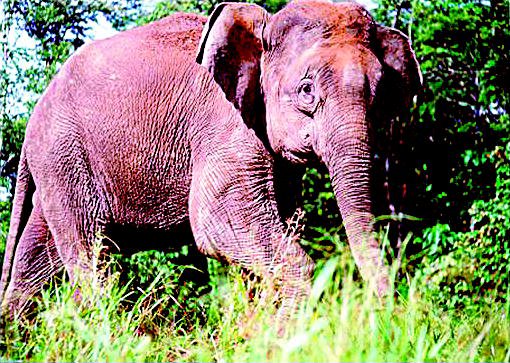
For years there have been arguments about the small population of Asian Elephants living on the island of Borneo. These elephants were smaller than their mainland cousins and considerably more docile. Some people thought these elephants were feral animals that had come from a once domestic population. The closest other Asian elephants are on the Island of Sumatra in Indonesia. When I was in Borneo I didn't have the chance to see these creatures because their range is so limited, found only in the extreme northeast corner of the island.

Recent DNA studies have shown that this population is a distinct subspecies that has been separated from other living populations for up to 300,000 years. When the sea level was lower Borneo was part of the Asian mainland. This is evidenced in the fact that the fauna of Borneo is predominantly Asian. Across a narrow, but deep strait of water is the island of Sulawesi. Sulawesi was never part of the mainland and has a mixture of a few Asian animals like monkeys, two wild pigs and some small wild cows (Anoa) plus a contingent of birds and mammals with origins in the Australasian area.

As the sea level rose the Bornean elephants became isolated.

The World Wildlife Fund is tracking some of these elephants by GPS hoping to better understand their movements and behavior. They are working with the government of the Indonesian state of Sabah to help preserve this distinct population of elephants. It is thought that the population stands at between 500 to 2000 animals.

There are only 35,000 wild asian elephants thought to be still roaming around in 10 countries in South and Southeast Asia.

Sunday, December 25, 2005

New Trout species found in Russia

A new species of fish in the same genus as our brook trout has been discovered in far eastern Russia. Technically the fish is a char, a group somewhere between the trout and salmon taxonomically.

http://www.practicalfishkeeping.co.uk/pfk/pages/item.php?news=782

Change of scope

I'm expanding the topics covered on this blog to anything about the natural world that I consider interesting, which is a lot. I envision this as a natural history boingboing.net or something. Here goes...

Friday, May 27, 2005

End of Migration

Yesterday I took a short walk around a little pond at the UConn Health Center. The Canada Geese have some little goslings now. They were feeding in the grass, while a few other adult geese floated around in the pond.

In a tree overhanging the pond I saw a male Orchard Oriole hopping around and singing.

On the way back to my office I stopped by the outflow stream and found a male Wilson's Warbler in a bush. In our parking lot the Warbling Vireos were singing.

I noticed that the Coltsfoot that were flowering last month have gone to seed and have little fuzzballs on the end of long stalks. The Russian Olives are in full flower with tens of thousands of tiny yellow trumpet-like flowers. The smell is very powerful and can be detected a long way from the bushes. It smells a bit spicy.

This afternoon at lunch I took a walk at the MDC Reservoir on Farmington Avenue in West Hartford. The vegetation has fully emerged, save a couple of trees. I watched a six-spotted tiger beetle running on the path in front of me. It flew a few feet when I got too close. A Gray Tree Frog was calling high in a tree near the trail.

At one of the ponds I saw a fine Northern Watersnake slip into the water of the small reservoir when I approached. There was some vegetation in the water which it hid in. I moved the vegetation and the snake, about 2 feet long, swam away underwater.

On the insect front I saw a few skippers (a mulberrywing and a dusky wing of some sort), a ringlet, several pearl crescents and a black swallowtail. I also saw the first dragonflies and damselflies of the summer.

I climbed up onto a small ridge, past some huge dead hemlocks killed by wooly adelgids. On the top of the ridge I watched a Red-eyed vireo feeding in the canopy of a large oak tree.